
Affiliate Disclosure: As an Amazon Associate and affiliate marketer, I may earn commissions from qualifying purchases—at no extra cost to you.
Thank you for reading this post, don’t forget to subscribe!
Table of Contents
- 1 Introduction: The Shift Toward Modular Content Thinking
- 2 What Is Modular Content Strategy?
- 3 Why Modular Content Matters for Creators
- 4 Core Building Blocks of Modular Content
- 5 How to Build a Modular Content System
- 6 Practical Examples of Modular Content in Action
- 7 Tools That Support Modular Content Strategy
- 8 Mindful Best Practices
- 9 Common Pitfalls to Avoid
- 10 The Future of Modular Content
- 11 Conclusion: Building With Modular Content Intention
- 12 References
Introduction: The Shift Toward Modular Content Thinking
In today’s digital ecosystem, creators, marketers, and entrepreneurs are under constant pressure to produce more content, faster, and across more platforms than ever before. The challenge is not just about volume—it’s about consistency, efficiency, and sustainability. This is where modular content offers a powerful solution.
Instead of treating each piece of content as a one‑off project, modular content strategy encourages you to build reusable blocks—like FAQs, calls‑to‑action (CTAs), templates, or even visual assets—that can be repurposed across platforms and campaigns.
For mindful entrepreneurs, this approach is more than a productivity hack. It’s a way to align your creative energy with intentional, sustainable growth.
What Is Modular Content Strategy?
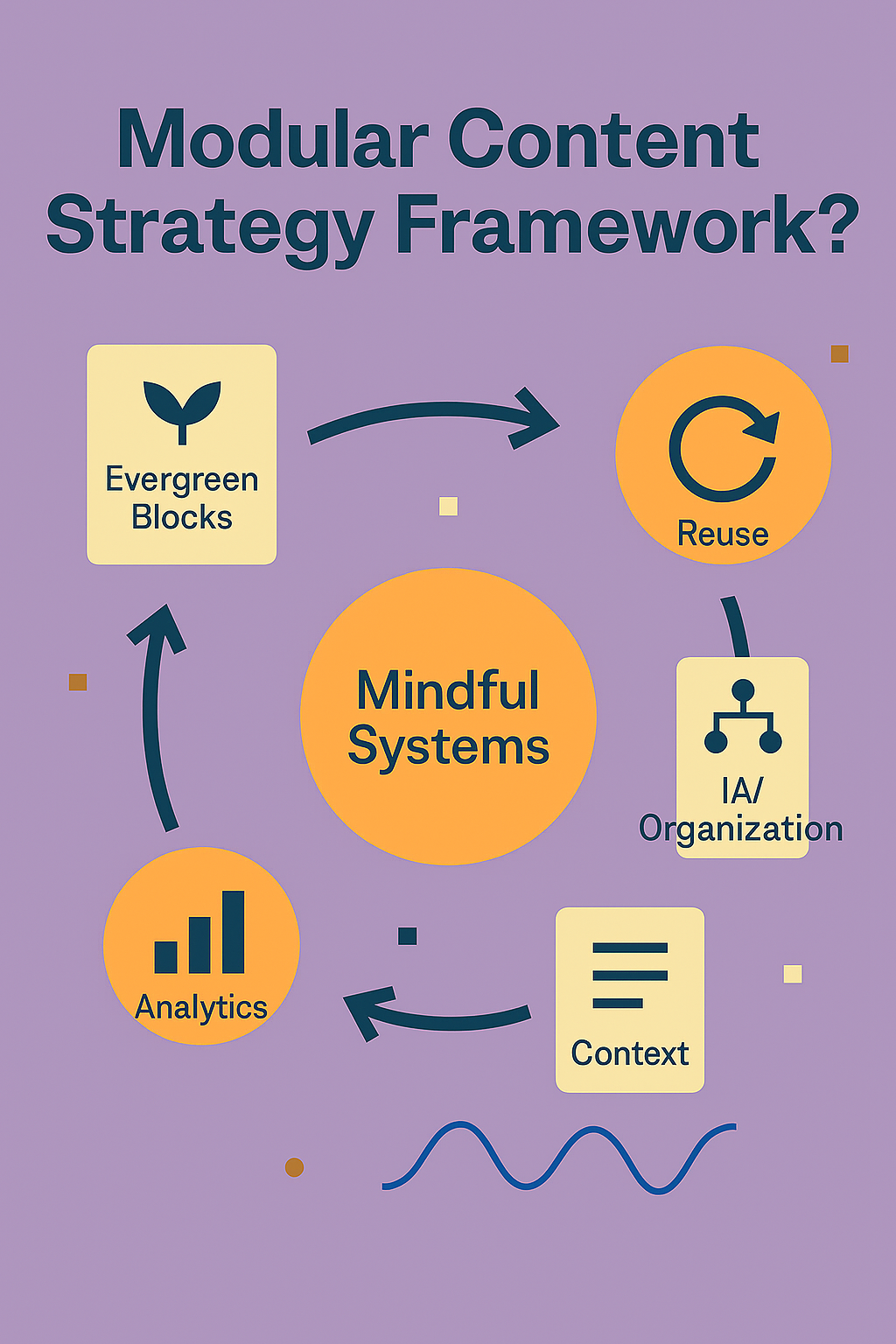
At its core, modular content strategy is the practice of breaking down content into smaller, reusable components that can be mixed, matched, and repurposed.
Think of it like building with LEGO® bricks:
- Each block (FAQ, CTA, testimonial, template, image, or snippet) is designed to stand alone.
- Blocks can be combined in different ways to create blog posts, landing pages, email campaigns, or social media content.
- Instead of starting from scratch, you assemble from a library of pre‑built, brand‑aligned modules.
This approach saves time, ensures consistency, and makes scaling content across multiple platforms far more manageable.
Why Modular Content Matters for Creators
1. Efficiency Without Burnout
Creators often face content fatigue. By reusing modules, you reduce the need to constantly reinvent.
2. Consistency Across Platforms
Your brand voice, design, and messaging remain aligned whether you’re publishing on WordPress, LinkedIn, or Instagram.
3. SEO and Discoverability
Modular FAQs, schema‑ready snippets, and structured templates can be optimized for search engines, boosting visibility.
4. Scalability
As your platform grows, modular systems allow you to scale content production without scaling stress.
5. Mindful Creation
Instead of rushing to fill content calendars, you focus on building evergreen, reusable assets that serve long‑term goals.
Core Building Blocks of Modular Content
FAQs (Frequently Asked Questions)
- Provide quick, structured answers.
- Can be repurposed into blog posts, video scripts, or chatbot responses.
- Boost SEO through voice‑search‑friendly phrasing.
CTAs (Calls to Action)
- Short, persuasive prompts like “Download the guide” or “Book a free consultation.”
- Reusable across landing pages, emails, and social posts.
- Modular CTAs ensure consistent conversion messaging.
Templates
- Pre‑designed blog outlines, email sequences, or social media post formats.
- Save time and maintain brand alignment.
- Can be adapted for different campaigns with minimal effort.
Visual Assets
- Icons, infographics, and branded images.
- Reusable across blog posts, presentations, and social media.
- Ensure visual consistency without constant redesign.
Testimonials and Case Studies
- Modular snippets of social proof.
- Can be dropped into sales pages, email campaigns, or pitch decks.
How to Build a Modular Content System
Step 1: Audit Existing Content
- Identify reusable elements in your current library.
- Extract FAQs, CTAs, and evergreen sections from long‑form posts.
Step 2: Define Your Modules
- Create a list of standard content blocks (e.g., FAQ entries, CTA variations, and testimonial snippets).
- Store them in a central repository (Google Drive, Notion, Airtable, or a CMS).
Step 3: Standardize Formatting
- Use consistent styles for headings, bullet points, and visuals.
- Ensure modules are copy‑ready for multiple platforms.
Step 4: Tag and Categorize
- Organize modules by theme, audience, or funnel stage.
- Example: “Top‑funnel FAQs,” “Mid‑funnel CTAs,” “Bottom‑funnel testimonials.”
Step 5: Repurpose Mindfully
- Adapt modules for context without diluting their clarity.
- Example: An FAQ answer can become a LinkedIn post, a YouTube script, or a chatbot response.
Practical Examples of Modular Content in Action
Example 1: Blog to Social Media
- Write a blog post with modular sections.
- Extract 3 FAQs → turn them into Instagram carousels.
- Reuse the CTA → adapt it for Twitter and LinkedIn posts.
Example 2: Email Campaigns
- Build modular email templates with interchangeable CTAs.
- Swap in different testimonials or offers depending on the audience segment.
Example 3: Affiliate Marketing
- Create modular product descriptions.
- Repurpose them across landing pages, comparison guides, and email sequences.
Tools That Support Modular Content Strategy
- Notion or Airtable – for organizing content blocks.
- WordPress reusable blocks – for FAQs, CTAs, and templates.
- Canva or Figma – for modular visual assets.
- AI‑powered tools – for generating variations of existing modules.
Mindful Best Practices
- Prioritize Quality Over Quantity: Don’t create modules just to fill a library. Focus on evergreen, high‑value assets.
- Respect Editorial Integrity: Ensure every module is fact‑checked and free of fabricated citations.
- Design for Accessibility: Use alt text, clear formatting, and inclusive language.
- Stay Brand‑Aligned: Every module should reflect your tone, values, and visual identity.
- Iterate and Refine: Regularly update modules to keep them fresh and relevant.
Common Pitfalls to Avoid
- Over‑fragmentation: Breaking content into too many small pieces can create clutter.
- Inconsistent Voice: If modules are created at different times without guidelines, tone may drift.
- Neglecting Context: A module should be adaptable but not stripped of meaning when reused.
- Ignoring Analytics: Track performance to see which modules actually drive engagement or conversions.
The Future of Modular Content
As AI and automation become more integrated into content workflows, modular strategies will only grow in importance. Imagine:
- AI agents pulling from your FAQ library to answer customer queries.
- Automated campaigns assembling CTAs and testimonials dynamically.
- Content ecosystems where every block is optimized for SEO, accessibility, and conversion.
For mindful entrepreneurs, this future is not about replacing creativity—it’s about freeing up creative energy for strategy, storytelling, and authentic connection.
Conclusion: Building With Modular Content Intention
Modular content strategy is more than a productivity framework. It’s a mindful approach to digital creation—one that values sustainability, clarity, and long‑term impact. By building reusable blocks like FAQs, CTAs, and templates, you create a content ecosystem that scales with you, instead of draining your energy.
The next time you sit down to create, ask yourself: Can this be modular? If the answer is yes, you’re not just building content—you’re building a foundation for sustainable growth.
References
- Content Marketing Institute – Give Content Its Own Marketing Strategy
- Nielsen Norman Group – Content Strategy Study Guide
- HubSpot
Amazon and the Amazon logo are trademarks of Amazon.com, Inc, or its affiliates.




Leave a Reply